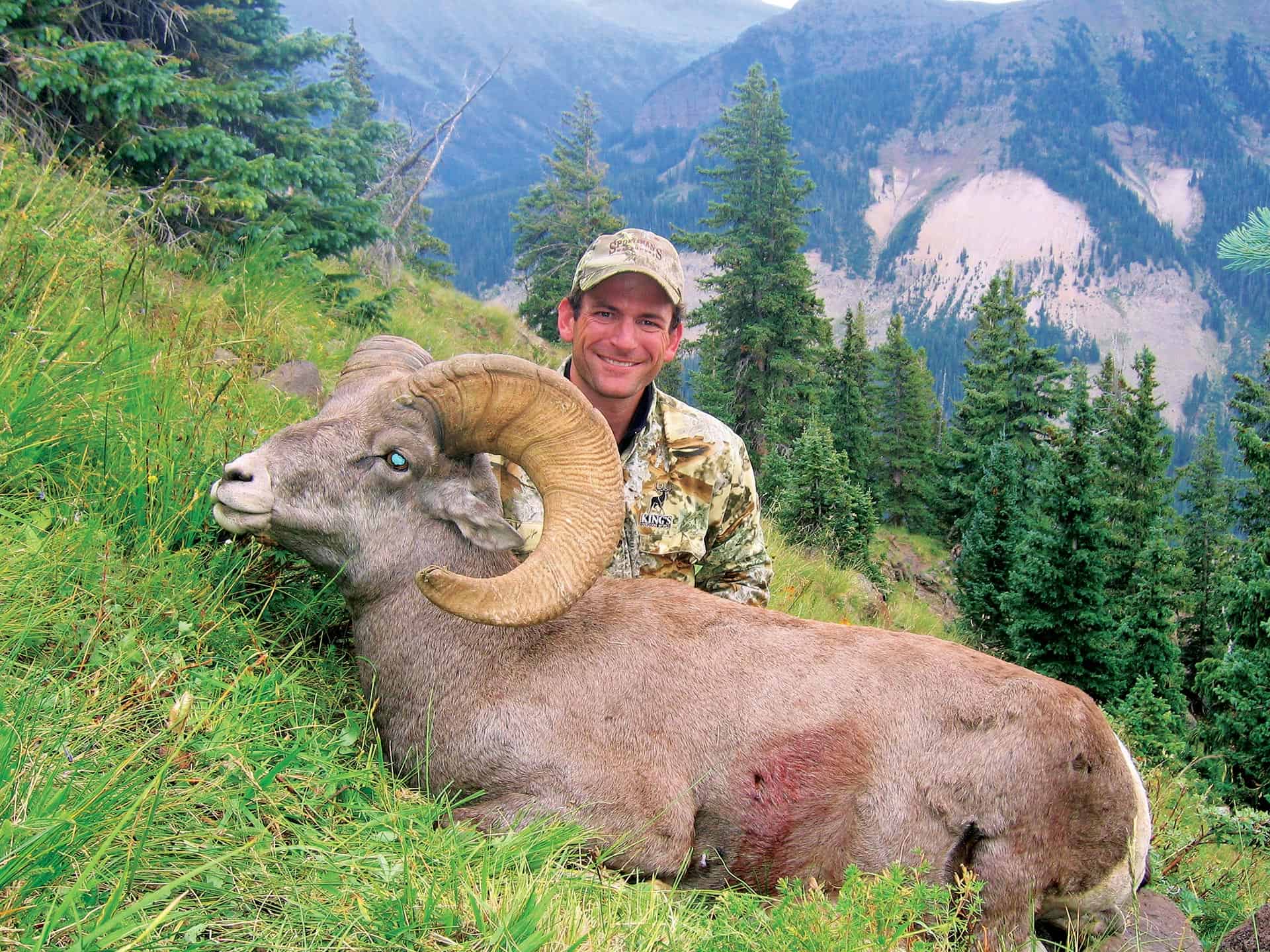
In our first Back 40 of the year, we’re heading to southern Colorado with Mirr Ranch Group broker Jeff Hubbard for a closer look at Trinidad and the region that surrounds it. With ranching roots older than the country itself, the Trinidad area was practically made for cattle production, wildlife habitat, and large-scale ranch ownership. Jeff also offers a helpful history lesson on the region, from its pivotal role along the Santa Fe Trail and its boom years as a mining town to its current resurgence as a destination shaped by recreation, open land, and enduring Western character.
Topics
[0:00] Exploring Trinidad, Colorado with Jeff Hubbard
[1:15] Getting to know Trinidad
[4:50] The Legacy of Coal City
[6:05] What Makes Trinidad Different
[9:29] Ranching in Trinidad
[11:42] Spanish Land Grants
[17:20] Trinidad Lore and Legends
[20:35] Trinidad Hidden Gems
[22:40] See You in Trinidad!
Haley Mirr (00:06):
Welcome back to the Land Bulletin Podcast, where every other week we bring you experts in the field to impart their knowledge when it comes to the ranch and sporting property market, buying and selling advice, the latest best stewardship practices, as well as topics that impact landowners every day. I’m your host, Haley Mirr. Let’s jump in.
Welcome back to the Land Bulletin Podcast, Haley Mirr here. And today we’re going to be doing our Back 40 episodes where we talk a little bit more about some areas of Colorado, the West, Wyoming, what have you, that you might not know a lot about. Today, we’re focusing on a part of Southern Colorado where Mr. Jeff Hubbard has done a lot of business. We’re looking at the town of Trinidad and kind of the surrounding areas, what that history looks like, things like that. So without further ado, welcome to the show, Jeff.
Jeff Hubbard (00:55):
Hey, thanks, Hailey. Nice to be here. Appreciate
Haley Mirr (00:57):
It. It looks cozy where you are. It looks better than here. My background is not great.
Jeff Hubbard (01:03):
One of those things where you got the fire on because it’s November, but you also have the air conditioning on because
Haley Mirr (01:09):
It’s. Yeah, it doesn’t make sense. Cool. Well, we will kind of get into it. For those who have never heard of Trinidad, how would you describe it? We can talk about location and then just overall what it’s like as a place.
Jeff Hubbard (01:27):
Yeah, so Trinidad is a town of about, I think current population is maybe 8,500 people. It’s one of those classic sort of … The story is one of small town America. It used to be kind of a booming place back when labor was needed for many trades and many businesses, including coal mining, farming, ranching. Namely, those are the three industries that define the history of Trinidad, Colorado. But the open country used to be dotted with lots of towns like Trinidad where you had lots of people and you had thriving little economies with stores, shops, pharmacies, movie theaters, opera houses, kind of everything that the big towns all have now and all the small towns have sort of blown away with industrialization and more efficient means of producing things. So it’s just kind of one of those towns. I’ve done a ton of business down there.
(02:46):
I have a lot of friends in Trinidad. It’s a stunningly beautiful part of the country. It’s sort of defined by the foothills of the Sanger de Cristo Mountains. There’s a prominent river that flows west to east through there called the Purgatory River, which eventually flows into the Arkansas River northeast of town. There’s a very prominent peak on the southeast of town called Fisher’s Peak. The weather is terrific. It’s like a lot of the front range of Colorado. It’s very sunny and pretty mild, kind of a banana belt for being in the Rocky Mountains or on the edge of the Rocky Mountains.
(03:31):
And lots of neat things to do, outdoor activities, public lands, fun people. And they’ve had sort of a renaissance in the last few years with new restaurants, pubs, some nice newer hotels. And that’s largely a function of a great new outdoor recreation opportunity that was created in 2017 when the state of Colorado acquired the Crazy French Ranch, which is about a 21,000 acre ranch on the southeast side of Trinidad. Ironically, my partner, Pat and I, mostly Pat, used to guide on that ranch when it was a private ranch going dating all the way back into the 80s. But really neat piece of ground right there that’s now all public. And the people can hike and bike and hunt. There’s no really fish, not anything in the way of fishing on there, but just a terrific big chunk of public land for folks to enjoy. And I think that’s really helped the town, helped the economy.
(04:48):
It’s inspired, as I said, the opening and thriving of some hotels, restaurants, and bars, et cetera. So Trinidad’s doing well these days, I think.
Haley Mirr (05:03):
Does it feel like some maybe of Colorado Springs, other places are moving south to Trinidad just because it’s a cheaper way of life. There’s some other kind of recreational opportunities.
Jeff Hubbard (05:13):
Yeah. I don’t know that anyone’s moving into there. I mean, the coal mine industry was really the backbone of that city in addition to farming and ranching. But I mean, when the coal mining industry sort of began to go away, really, it’s sort of been diminishing in terms of resident population. But like I say, it’s sort of become this touristy thing and it’s close to Denver. It’s only two and a half hours from Denver, 190 miles south. You don’t have to get on I- 70 and fight I70. You can just zip down 25, much less traffic, lower blood pressure driving situation. And it’s less expensive. You could have a great terrific mountain trip in Trinidad and spend 20% of what you would in our resort towns.
Haley Mirr (06:06):
I would agree. I think that drive, and I love that drive, just kind of going into New Mexico, how the landscape changes everything. I would love to talk about what the ranches are like down there. What makes the ranches near that part of Colorado different, or why might someone invest in that part of Colorado versus other places?
Jeff Hubbard (06:31):
Well, for the production end of ranching, cattle ranching, that ecosystem is very attractive. The turf is highly productive grassland for cattle grazing, just the natural state of the turf, the native grasses, and it’s just terrific grass for cattle. And the climate is conducive to cattle grazing. It’s not like being up in Wyoming or parts of Nebraska, South Dakota, Montana, where you’ve got to fight the winters, and it’s relatively mild, and it’s just a very attractive part of the world for cattle production as it relates to the other things that we do in our business. As I said, it sits at the foothills of the Sanger Cristos. And that’s a really terrific, one of our iconic mountain ranges with, I don’t know, 30 plus 13,000 foot peaks and one 14,000 foot peak. I mean, it has the Alpine infrastructure, Alpine nature, but yet it goes all the way down to 5,000 feet right there between Trinidad and the top of the range, which is a span of about 30 miles.
(08:21):
And that country in there is just terrific for wild game, namely elk here because they can migrate from the high country down to the low country. And in this state, it traditionally has been one of, if not the most high quality trophy hunting areas in the state. And that’s primarily because it’s virtually all private, unlike every other Alpine environment in our state, which is, and this is great, public for public use, most of that land down there is still private. So it’s been managed privately by private landowners for the highest value use for game, which is big, large trophy quality game. So hunters have been selective. Landowners have been selective. And as a result, you have a lot of really high quality animals down there. So Pat and I have sort of made a career, our niche, we sell all types of ranches, but both of us were, before becoming ranch brokers, were hunting guides, so we’re still very passionate about hunting, and that’s just a really good spot for hunting.
(09:41):
And there’s a lot of private land, so naturally it makes sense for us to do a lot of business down around there.
Haley Mirr (09:49):
What are some of the favorite projects that you’ve worked on? I know we didn’t work on Crazy French, but it was a really cool property that we know how that transaction went, but what are some of the projects that you’ve worked on that are pretty sizeable in that neck of the woods?
Jeff Hubbard (10:08):
Yeah. So gosh, we sold 10,000 acres this summer right up on top of the range at the headwaters of the Purgatory River. Actually, the western end of this property was literally the top of the Sanger de Cristo Range at the top of Purgatory Peak. We referred to it as Purgatory Peak Ranch. Incredible, incredible Alpine Ranch. That was a neat deal. Just awesome elk hunting and deer hunting place. So most recently, that would be the one. But my gosh, over the years we’ve, oh, both in northern New Mexico, Trinidad’s right on the New Mexico border. So it’s sort of New Mexico-ish. And we’ve done a lot of business right there in New Mexico on the northern New Mexico border, close to Trinidad. East of Trinidad, we’ve had some neat deals over the years, Northeast. We just sold one and we closed it on Friday. Actually, it was 40,000 acres, probably 20 miles northeast of Trinidad, the Bowen Arrow Ranch, more of a cattle production type place.
(11:26):
Also, really solid wildlife hunting deal too, but more out in the plains out there. Moonshine Ranch, one of my favorites was owned for seven or eight years by a man who’s still a very good friend of mine, and we did a lot of hunting. My kids, he was nice enough to let my kids hunt that place. So there’s a real special place in my heart for that ranch. Gosh, we could just go on and on, Haley. We’ve
Haley Mirr (11:56):
Done a lot of work. That’s good. And I guess one of the things I wanted to focus on is the history too of the Spanish land grants and how the trajectory of what ranches look like down there was a little different. Can you talk to that a little bit about why that might make some of these ranches a lot bigger than what you might see in some of these other kind of resort areas or things like that?
Jeff Hubbard (12:32):
Yeah. Well, the history of Trinidad is very interesting. We could do a three-hour podcast history, so I’ll try and not ramble too much here. So everywhere in the state of Colorado, south of the Arkansas River up until 1848 was part of old Mexico, and that would include Trinidad and the surrounding mountains. And it was inhabited by Mexicans and almost exclusively, we traded with them for decades going all the way back to the late 1700s. And the primary trading route from the goods of old Mexico into the United States and the goods from the United States into Old Mexico was through Trinidad along the Santa Fe Trail, which Santa Fe, New Mexico was the northern most metropolis, if you will, in old Mexico. And that’s where people of Mexico, the people of the United States would get together and trade. And in order to get those goods back to the east, people of the United States would travel northeast across Raton Pass into Trinidad on the Santa Fe Trail and then Northeast up to the Arkansas River eventually to the Missouri River in Independence, Missouri, I believe, at which point they would go down the river and go wherever they wanted.
(14:00):
So that’s probably the origin of Trinidad was built around being kind of a stop along the Santa Fe Trail way back when.
(14:14):
And the roughest part of that trail from Santa Fe back to civilization in Missouri was Raton Pass, which is just south of Trinidad. So I think people would travel back and forth along Raton Pass and they would need to stop and rest either in Trinidad on the north end or Raton on the south end. And the town really sort of got its legs starting in the post-Civil War era up through then, it was more or less just a center of commerce for farmers and ranchers who were settling the area. It was a nice place topographically, ecologically, because the river flowed through there. There were lots of big cotton woods, nice weather, so on and so forth. But then the real boom in Trinidad occurred late 1800s. Actually, I think it was around 1880, the action to Topeka and Santa Fe Railway built a railroad across Raton Pass from Santa Fe up north to Denver.
(15:28):
And that was the end of the Santa Fe Trail. And again, almost concurrent with that was the discovery of coal seams in those hills around Trinidad. And we had an influx of European workers right around the turn of the century who needed work. So many of them traveled to Trinidad to go to work in the coal mines. And the city, the town was really quite a booming town around the turn of the century up through really probably the Great Depression. I mean, during, I think, World War I, with all the need for steel and other materials, those coal mines were just … The production was extraordinary. They were more productive than the ones in Kentucky and West Virginia and Pennsylvania. And so lots of Eastern and Southern European immigrants who came to Ellis Island and didn’t speak the language and needed work were … They boarded a train and stopped in Trinidad and went to work in the mines.
(16:36):
So you have a really diverse demographic in that town. If you ever spend any time there, lots of Italian influence, Eastern Southern European influence, in addition to clearly Hispanic roots influence. So it’s a fun mix of a lot of different cultures. And then as I said, around the Depression going into the Second World War, the need for coal diminished significantly because of better materials for energy production. So the town sort of shrunk. People moved to places like Denver and Albuquerque. And I think at its peak, it was about a 15,000 population, probably around the 20s, somewhere in there. And now it’s maybe six or 7,000, I would guess.
Haley Mirr (17:31):
Okay. And that brought up a thing, and we should do another part of our back 40 is the myths of some of these places. But Ken was saying that at one point there was a heavy influence from the mob down there. And I don’t know if that’s true. And if it’s not, you can take that out. Okay. Can you tell me a little bit about that?
Jeff Hubbard (17:57):
Yes. I have some interesting insight into that. So Moonshine Ranch, as I earlier described, I’ve got a lot of history with … It’s right there in the area. And the reason it’s referred to as Moonshine Ranch is because during prohibition, when the FBI was hot on the heels of Al Capone, he left Chicago and hid out in those hills around Trinidad. And there was a spring on Moonshine Ranch and there was an old homestead up in the hills in the middle of some of the biggest old growth trees you can imagine, rough little spot right there, but a great spring that still runs beautifully. And he ran a still up there and I don’t know how many years he was there, probably not that many, three or four, but he was hiding out from the Feds and still producing whiskey for the folks in the producing and selling whiskey for the folks in that area.
(18:59):
The reason it was attractive to him is because there were so many people of Italian roots and obviously he was Italian American, so he was able to identify with them. He probably had family and obviously friends or people who knew people. So Trinidad, it’s kind of at the end of the world right down there. It’s also on the border and border towns are famously a little edgy because if you get in trouble, you just scoot down across the border.
Haley Mirr (19:33):
Into New Mexico.
Jeff Hubbard (19:35):
Yeah, exactly. So yeah, it’s a great question, but yes, indeed. And Trinidad’s always been a little bit of an edgy place. I mean, famous outlaws down there. Batmasterson, the famous lawman was the sheriff or whatever they called him. Back then, he was the head lawman in Trinidad for, I don’t know, 10, 12 years and buddies with Old Kit Carson and Wyatt Earp. And they hung out and chased criminals around. And they were pretty … Masterson was … He was famous for not ever using firearms. So they would run around with the baseball bats and enforce the law. Yeah. And he was kind of the walking tall guy of Trinidad, Colorado 100 years before the walk and tall guy. Of course, I can’t remember his name now. So just a very, very interesting place. As I said, I could go on and on. I know we’re nearing our time, but yeah, lots of fond memories of being in and around there and lots of really good folks in that town.
Haley Mirr (20:58):
And one of the things we do on here, Jeff, is we talk about a favorite watering hole, restaurant, something funky, mostly for Caroline and I to have a better roadmap when we go out to these places. But where are some of the places that you stop through after a long day showing a ranch or hunting or some of your buddies that live down there? What’s some of their favorite kind of haunts?
Jeff Hubbard (21:24):
Oh gosh, it’s all changed so much. The ones we used to get to, they’ve all gone out of business back when we were hunting down there. There was a great bar called Blackjacks, which is now something else. A lot of these have changed names, changed ownership, but it’s a … And I apologize, I don’t know the names of any of these places. I’ve been in a lot of them, but …
Haley Mirr (21:49):
What’s that? There’s like a singing pizza place or something
Jeff Hubbard (21:52):
Like that. Oh yeah, that’s Reno’s. That place has been there forever and it’s fun. The Italian food’s good and they’ll serenade you. They’ve got three or four guys who will sing to you. And it’s really in an old Victorian building. It’s a beautiful building. Super nice people. And gosh, that place has been there for probably 50 or 60 years. I’m glad you pointed that out because I forgot about Reno’s, but they’re all these new more sort of hipster type … I mean, not hipster, but they’re like neat old saloon type things. Yeah. And they got microbrews and great food, and you can walk everywhere. There’s great new hotels, Hilton Garden Inn right in town, and you just walked all the main street where all the stuff is. So it’s really fun. And it’s changed a lot, but for the better, I think.
Haley Mirr (22:52):
I would agree. It’s a stop we always make on our way down to Santa Fe. It’s a good, perfect kind of halfway point, and they have a good dog park, so we always stop there with Tater. But no, I think it’s a very … I would agree. It’s one of those towns like you see throughout the West with the old architecture and the influence from Europe and all these different things, but it has that different edge because it used to be part of old Mexico. So it’s like this kind of combination of all of it put together, which is cool. Plus, not to mention, the landscapes down there are beautiful. To your point, some of the biggest, most interesting landscapes that you’ve worked on and that we’ve worked on here at Mer Ranch Group.
Jeff Hubbard (23:35):
But I think we’ve hit the high points. And for the folks at Trinidad, I’m happy for you, if any of you are listening, that you’ve had this renaissance. And I think the future is bright for you, particularly with the Fishers Peak State Park. And you’ve always had Trinidad Lake there, which is really good fishery just west of town, a mile or two, big lake, great fishing. It’s really a neat spot. We’ll always have a soft spot in my heart for it, and it’s fun talking about it.
Haley Mirr (24:07):
Yeah. Well, we appreciate you taking the time, Jeff. And as always, you know the landscape better than anyone down there, you and Pat. So if people have interest or questions about the area, reach out to Jeff or Pat directly or head up to the office and let us know what questions you have. But we appreciate you taking the time, Jeff, and talking about one of my favorite parts of Colorado as well. Thanks.
Jeff Hubbard (24:31):
Thank you, Hailey. It was fun. Talk soon.
Haley Mirr (24:33):
It was fun.
Thanks for joining us today. To learn more about the Ranch Real Estate Market or our ranch marketing process, make sure to subscribe to our newsletter on our website at mirrranchgroup.com or give us a call at 303-623-4545. See you next time.
Mirr Ranch Group
901 Acoma Street
Denver, CO 80204