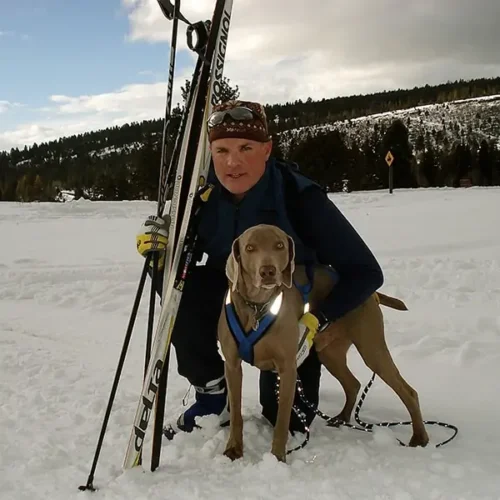
We’re back and exploring Utah’s Kamas Valley – an area just outside Park City but a world apart in pace and lifestyle. Mirr broker and resident Utah-expert Chris Corroon joins Haley to break down what makes this high mountain valley so enticing to ranchers and outdoorsmen alike.
With access to the Uinta Mountains and fishing on the Weber and Provo Rivers, the Kamas Valley is quietly gaining buyers’ interest for its year-round recreation and ranching appeal. Chris takes us through local market trends, conservation tied to the Great Salt Lake watershed, and why this area stands out for both lifestyle and land ownership.
Topics
[0:00] Intro: Welcome to the Kamas Valley with Chris Corroon!
[1:40] Getting to know the Kamas Valley
[3:36] Living in the Kamas Valley
[5:00] Recreation in the Kamas Valley
[8:03] Ranching in the Valley
[10:37] Who Would Thrive Here?
[11:41] Mirr Properties in the Area
[14:08] Kamas Valley Hidden Gems
[17:11] See You in the Valley!
Haley (00:06):
Welcome back to the Land Bulletin Podcast, where every other week we bring you experts in the field to impart their knowledge when it comes to the ranch and sporting property market, buying and selling advice, the latest best stewardship practices, as well as topics that impact landowners every day. I’m your host, Haley Mirr. Let’s jump in.
Welcome back to the Land Bulletin Podcast. We’re actually going to be doing another one of our Back 40 series where we learn about some of the rural communities of the West that you might not know a lot about, but are close to places you do. So one of those places today is in Utah, and what better person to teach us about the Kamas Valley than Chris Coroon. Thanks for coming on the show, Chris.
Chris (00:45):
Yeah, thanks, Haley, for having me.
Haley (00:48):
So for those who don’t know where the Kamas Valley is, and I said it’s close to places we do know for a reason, what is one way you describe it for someone who’s never heard of it that would make them want to visit someday?
Chris (01:03):
So a lot of people that come to Utah, especially the tourists and skiers, are familiar with the Park City community. And the Kamas Valley is literally, it’s 25 minute drive east of Park City. And the valley itself, it’s a fairly big valley and it consists of some couple of towns and hamlets, but it’s literally at the far western edge of the Uinta Mountain Range, which is the largest east-west mountain range in the contiguous US.
Haley (01:45):
And what stands out about the valley? How is it unique to or different from some of the areas that are nearby or out west?
Chris (01:53):
As far as Utah goes, it’s one of the larger mountain valleys within close proximity to the Park City area and the Salt Lake area for that matter. And I think the proximity to the Uintas makes it really unique in that it offers an abundant amount of recreational opportunities in the mountains. I lived in the Hebrew Valley, which is one of the other larger valleys in the area for close to 25 years. And that’s an area that’s really exploded in terms of growth. It’s now kind of an extension of almost the new Deer Valley ski terrain, but Kamas Valley, it’s a beautiful area. It was settled by the pioneers back in the 1850s. Brigham Young, it was typical of him to send out folks throughout the state to settle these communities. And this was one of the valleys that was settled there. But probably the proximity to a major ski resort town makes it a little unique.
Haley (03:03):
So is it been predominantly farming and ranching in this valley over the last couple of years?
Chris (03:08):
Yeah, it has. It was settled again by the pioneers. So big … The soil up there is really conducive to hay production, grazing. There’s some dairy farms that were established there. There were some saw mills. And so kind of your typical Utah pioneer valley, really, in terms of what was established.
Haley (03:41):
And how would you describe, we call it the personality of the valley? What are the towns like? Who are the type of people that live there when you’re expecting to live somewhere like this? Who do you think your neighbors are going to be?
Chris (03:53):
Well, Utahans, we’re unique in our sense of humor. So good folks, good, really good, hardworking people, obviously, industrious people, which is an indication of the pioneer heritage. So Utah is the industry state, but it’s changed. The communities change. So there are people that are moving there from obviously the Park City area and there’s people that are retiring there from all over the country for that matter. So as is typical in the West, we see these ski towns that are kind of bursting at the seams and the Kamas Valley is one of those communities that is being impacted by growth in these ski areas.
Haley (04:47):
Yeah. It’s kind of like some of those like the Jackson Pinedale, people start to shift into those places where maybe the price per square foot, price per acre is a little bit more manageable or understandable than some of those ski areas. Let’s say you have a free weekend in the Kamas Valley. What are some of the activities that people do or participate in as a local?
Chris (05:12):
So there’s two rivers that flow near or through the valley, the Weber River and the Provo River. So those are, I like to say as far as Utah goes, they’re as good as you’re going to get for fly fishing. They’re close by. The reason I love Kamas, I’ve always loved it, is the accessibility to the Yuenta Mountains. The Kamas Valley is the gateway to the Yuentas and you can head up MiraLake Highway and be up in one of the more spectacular places at the state. The High Yuentas, there’s hundreds of miles of trails for horseback riding, hiking, ATVing, camping. I used to spend a lot of time up there in the winter, specifically on the Mirror Lake Highway, just for skiing. I would freestyle. I would Nordic ski up there and based on their elevation, they get a lot of snow. So it’s a really wonderful place for recreation.
Haley (06:19):
You mentioned going skiing with your dogs. Is there really good cross country skiing?
Chris (06:24):
Yeah.
Haley (06:24):
Yeah. Okay.
Chris (06:25):
Yeah. As a matter of fact, I was talking to Woody about that. So they groomed this highway. It’s called the Mirror Lake Highway, and they closed it off. They closed the road right just beyond camus. And I used to skate ski up there for … I’d go up on Sunday afternoons while the sun was going down and it’s spectacular.
Haley (06:50):
That’s awesome. So snowmobiling, skate skiing, a lot of good-
Chris (06:54):
Yeah, all that stuff. A lot of snowmobiling out there. A lot of skiing. A lot of these kids are taking their snowmobiles up and they’re back country skiing up there.
Haley (07:03):
And other than the fishing for you, what are some of the reasons that people fall in love with this valley? Is it kind of the proximity of everything makes it different? Yeah.
Chris (07:15):
Definitely a slower pace. You’ve got mountains on really all sides of you, which is why it’s a valley. Views are incredible. You actually get views of the Deer Valley Ski Resort when you get up in certain parts of the valley. But I would say for people that are new to the area, probably the proximity to Park City, it’s also close to Salt Lake. You can be in Salt Lake within an hour. So if you’ve got a good attitude and are willing to adapt to the local culture and want a slower pace, it’s a great alternative to obviously some other areas of Summit County and the Salt Lake, the Wasatch Front, as we call Salt Lake area.
Haley (08:11):
And from an agricultural perspective, because I know we’re going to talk about a listing you have in this area, what makes this valley particularly good ground for ranching compared to maybe some other valleys in the area?
Chris (08:25):
So again, it’s the western slope of the Uintas. And so there’s incredible water resources, a lot of good water, a lot of good soil. If you look at an aerial map of the valley, you don’t see a lot of pivots, a lot of big agricultural pivots. What you do see are a lot of the ground up there is flood irrigated or sub-irrigated. So a really good place to graze cattle and to grow hay. So it’s a shorter growing season typically of what you’ll see in some other areas of Utah, but not that much shorter.
Haley (09:11):
Because of the water, is there a lot of alfalfa? What are the-
Chris (09:14):
All the alfalfa. Yeah.
Haley (09:15):
Okay.
Chris (09:16):
All alfalfa and just grass mix. But yeah, I mean, we’ve got, for instance, we have a listing up in the Kamas Valley. It’s the T7 ranch and I don’t think there’s a … Well, there’s not a pump on that property for water. So a lot of old historical diversions and culverts. And so a lot of good water resources in the valley.
Haley (09:47):
In addition to the ranching, I know you mentioned there’s a little bit of conservation work. What’s going on from a conservation perspective in the Kamas Valley?
Chris (09:56):
So that’s a great question, Haley. That valley, because it does serve as a watershed for the Great Salt Lake, ultimately with the Provo and the Weber River, there have been a couple of local land trusts that have been really great and active in acquiring open space in some of those Kamas meadows and kudos to those guys. And there’s been a lot of buyers that recognize the value of that, a lot of landowners, and they’ve been also active in reaching out to some of those conservation groups to see that their land is preserved in perpetuity.
Haley (10:36):
That’s awesome. Well, it’s good to know that those open spaces will still exist unlike some of the neighboring areas. So that’s another benefit to the spot. So who do you see as the ranch buyers up in this area? What are the typical people that are even looking at a Kamas valley as an investment opportunity?
Chris (10:58):
We have a lot of folks that are looking to set up their own little homestead up in the area, and it’s a perfect area to do that. But really, a lot of equestrian buyers, of course, we see a lot of that. You see that all over the Hebrew Valley and the Kamas Valley, but it’s somebody that doesn’t want a really intensive agricultural operation, but something that’s manageable. And there are not a lot of big ranches for sale up there based on just the number of ranches and the size of the valley. It’s not like typically you’re not going to find ranches in the Kamas Valley that you would in say Montana or parts of Wyoming or parts of Idaho.
Haley (11:53):
So tell me a little bit more about the T7 and other than the size and layout and things, what makes it kind of unique to this valley and why did you get excited to list the T7?
Chris (12:05):
T7 was owned by a fifth generation family up there up in the valley, and it’s one of the largest land, contiguous ranches up there that’s currently for sale, but it sits up against the base of Hoyt’s Peak, which is one of the westernmost peaks of the Uintas. It’s just in a quiet little setting and it’s got spectacular views. The ranch is relatively flat, but there is a portion that gradually rises up towards the base of the mountain. So it’s got direct access to the US Forest Service and just very kind of a quaint little area, and it’s a blank slate. There are really no improvements on it other than some of the canals and ditches and diversions. But the folks that are currently managing that property, they’re an old Kamas Valley family and they’ve done an incredible job in maintaining the pasture. And so it’s a really great property in terms of being able to grow and graze cattle on there, grow hanging graze cattle.
Haley (13:25):
Great. And how is the market in that area right now in the Kamas
Chris (13:29):
Valley? The market in Utah overall I’d say it’s still a little bit stale, but there are signs that things are picking up. And really, we all know that location is prime and real estate, and you can’t get any better location than this. If I was to compare this to the Heaver Valley, it’s a lot less expensive in some instances than that particular valley, which has kind of grown to the hilt, so to speak. So a little bit more competitive pricing over in Kamas.
Haley (14:08):
Yeah. It seems like there’s a lot more opportunity in Kamas and for people with the vision and who want to be next to all those things. When you go on your tours, any head in gems or restaurants of places you stop or sunsets you watch or fly fishing haunts that maybe you don’t want to tell the public about, but anything that you want to
Chris (14:32):
Share? Everybody with social media, everybody knows everything anymore, but there are some great spots. There’s a gentleman who grew up there and he’s basically kind of repurposing some real estate downtown. Part of that is the Oakley Diner, which is a really cool place, especially if you like burgers and milkshakes. It’s right in Oakley. And then there’s the MiraLake Diner, which I’ve never been to. I hear it’s great. There’s a little place called the Samick Smokehouse, which I used to visit all the time when I’d go up there on Sunday afternoons for my little ski jaunt with my dogs. And you pop in there and get some beef jerky and smoke salmon jerky. There was a new cidery up in the Kamas Valley.
Haley (15:27):
Oh,
Chris (15:27):
Cool. I think it’s called Dendrick and it’s really cool spot and they are trying to make a name for themselves, but apparently I hear that it’s a really cool place. I’ve never been there, but I’m anxious to go there. And then if you like Country Western stores, I think one of the best country western stores in the state, and maybe not even the region is in there. It’s called Bolt, and it’s right in Kamas, but Bolt is a really cool place that I recommend if you need a hat or a Stetson shirt or a pair of boots. I didn’t know about it. A friend of mine who was visiting from out of state told me about it, and sure enough, I went over there last time I was up there, but it’s a cool spot. This is cool. Yeah.
Haley (16:15):
So how many towns are in the Kamas Valley? So you mentioned a few
Chris (16:18):
Different hotspots. I think Peioa is a little community that’s right at the top of the valley. And then all the way down to Woodland, which is a spectacular area. It’s not in the valley, but it kind of leads up into the southern end of the valley up through where the Provo River runs. And then of course Oakley, Kamas are the bigger communities. Marion’s kind of a hamlet, little unincorporated area, but they’ve all got their own old personalities and their own characters, but well worth visiting in a good spot. And recommend that if you’re visiting Utah, you check out the Kamas Valley.
Haley (17:02):
Yeah. It sounds like an amazing place. I mean, that’s what we’re finding with all these communities that are just near resort towns, but not right in the epicenter. It’s just like really cool opportunity and you still get the access, you still have the open space though still. It doesn’t feel like you’re too compact like some of these places. So it sounds like a really neat spot. Well, thank you, Chris. I want to check out all the diners that you mentioned. I’m a diner gal, so all those sound really fun. But yeah, just having another opportunity to see parts of Utah and to be able to fly into Salt Lake and still access these things within a few miles is awesome. So thanks for imparting your knowledge about the T7 and the Kamas Valley. I’d love to visit one day.
Chris (17:47):
Great. Thanks, Allie, for featuring the Kamas Valley.
Haley (17:50):
Yeah, of course. Thanks for being on the show, Chris.
Chris (17:53):
Yeah, thank you. You guys.
Haley (17:55):
Thanks for joining us today. To learn more about the Ranch Real Estate Market or our ranch marketing process, make sure to subscribe to our newsletter on our website at mirrranchgroup.com or give us a call at 303-623-4545. See you next time.
Mirr Ranch Group
901 Acoma Street
Denver, CO 80204